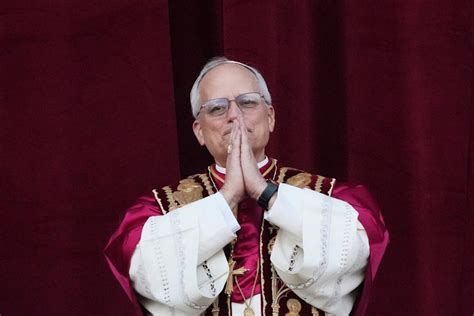
Papal Name Changes: Robert to Pope Leo ExplainedOftentimes, guys and gals wonder why a Pope, whose given name is something like
Robert
, suddenly becomes known as
Pope Leo
. It’s a really common question, and honestly, it makes a lot of sense to be curious about it! The truth is, this tradition of changing names goes way back, and it’s steeped in history, symbolism, and a profound sense of spiritual transformation. It’s not just about picking a new moniker; it’s about embracing a new identity that reflects the immense responsibility and spiritual authority that comes with being the leader of the Catholic Church. When we talk about
why a person like Robert
would adopt a name like
Leo
, we’re diving into centuries of tradition and the deeply personal and public commitment a Pope makes. This article will unravel the fascinating reasons behind papal name changes, helping us understand the gravity and significance of this age-old custom, using our hypothetical
Robert
becoming
Pope Leo
as a perfect lens to explore this intriguing aspect of the papacy. It’s truly an incredible journey from a personal identity to a universal spiritual one, and we’re here to break down all the cool details for you.## The Tradition of Papal Name Changes: Why Popes Choose New IdentitiesThe
tradition of papal name changes
is one of the most distinctive and
symbolic practices
within the Catholic Church, a ritual that truly marks the beginning of a new pontificate. When a cardinal is elected Pope, he is presented with a crucial question: “Do you accept your canonical election as Supreme Pontiff?” Upon his affirmative response, he is then asked, “By what name do you wish to be called?” This moment, often shrouded in the solemn privacy of the Sistine Chapel during a conclave, is incredibly profound. It signifies a profound spiritual and administrative transformation, leaving behind one’s birth name—like our hypothetical
Robert
—to embrace a new papal name, such as
Leo
.The roots of this custom aren’t as ancient as one might think, at least not in its current consistent form. Historically, early popes often kept their birth names. For instance, the first Pope,
Saint Peter
, was born Simon, and his change to Peter (meaning “rock”) was a direct command from Jesus, giving it unique theological significance. However, the consistent practice of
all
popes adopting a new name only truly solidified in the 10th century.
Pope John II
, elected in 533 AD, is often cited as the first Pope to change his name, doing so because his birth name, Mercurius, was also the name of a Roman pagan god – a significant conflict for the head of the Christian Church! This early instance highlighted the idea of avoiding names deemed inappropriate or pagan. Later,
Pope Sergius IV
, elected in 1009, whose given name was Peter, chose a different name out of
humility
, feeling unworthy to bear the name of the Prince of the Apostles. This set a powerful precedent: the papal name isn’t just a label; it’s a statement of humility, a break from the past, and an embrace of a new, sacred mission. For our
Robert
, choosing
Leo
would be about stepping into a vast legacy.When a man like
Robert
becomes Pope, shedding his previous identity and adopting a name like
Leo
, it’s not merely a formality; it’s a
profound spiritual act
. It symbolizes a complete surrender to his new role as the Vicar of Christ, the Bishop of Rome, and the head of the global Catholic Church. The new name represents a spiritual rebirth, a shedding of the secular and personal in favor of the sacred and universal. It’s a public declaration that he is no longer simply
Robert from [wherever]
, but rather
Pope Leo
, a figure dedicated entirely to the service of God and His Church. This change helps him distance himself from any past political affiliations, family ties, or personal ambitions, ensuring that his leadership is perceived as purely spiritual and universal. It allows him to embody a new, unifying persona for Catholics worldwide. This tradition emphasizes that the man himself, with his personal history and identity, is stepping aside to allow the
office
of the papacy to shine through, guiding the faithful with a sense of continuity and tradition that spans millennia.The choice of a specific name, such as
Leo
, is also incredibly significant. It’s often a tribute to a venerated predecessor whose pontificate the new Pope wishes to emulate, or it can be a reflection of the theological or pastoral program he envisions for his papacy. For our
hypothetical Robert
, choosing
Leo
might mean he wishes to embody the
courage, strength, and intellectual vigor
associated with historical Popes Leo, such as
Leo the Great
or
Leo XIII
. It’s a way of aligning himself with a particular legacy, drawing strength and inspiration from those who have walked the path before him. This deeply thoughtful process underscores the weight and meaning embedded in every papal name choice, making it far more than just a matter of personal preference; it’s a historical and spiritual declaration. It’s a moment where a man, by taking on a new name, signals his entire mission to the world, guys.## A Deep Dive into the Significance: More Than Just a New MonikerDelving deeper into the
significance of a papal name change
, we quickly realize it’s far more than a simple formality or an update to a business card; it’s a powerful symbolic act packed with spiritual meaning and historical resonance. When someone like
Robert
ascends to the papacy and chooses a name like
Leo
, he is actively participating in a tradition that underscores the
spiritual authority
and continuity of the Petrine office. It’s a visible and audible sign that the man is no longer primarily
Robert
, the individual, but
Pope Leo
, the successor of Peter, entrusted with guiding the universal Church. This transformation helps to reinforce the idea that the office is greater than the man, and the chosen name becomes a beacon for his pontificate. The new name connects him directly to a lineage of spiritual leaders, anchoring his authority not just in his personal charisma, but in the unbroken chain of apostolic succession.This change also speaks volumes about the new Pope’s
vision and legacy
. The name he chooses often serves as a blueprint or a declaration of intent for his papacy. For instance, if our
Robert
chose the name
Leo
, it could be a deliberate nod to figures like
Leo I (Leo the Great)
, renowned for asserting papal authority and defending theological orthodoxy, or
Leo XIII
, known for his intellectual prowess and social teachings like
Rerum Novarum
. By picking
Leo
, Robert would be signaling that he intends to lead with
courage, strength, and perhaps a focus on doctrinal clarity or social justice
, depending on which historical Leo he wishes to evoke. It’s a profound way to articulate his priorities and the kind of leadership he aims to provide to the global Catholic community. He’s literally saying, “This is the path I intend to walk, and these are the qualities I wish to embody,” through a single, powerful word. This makes the choice not just personal but also deeply public, shaping expectations and providing context for his future actions and pronouncements.The act of adopting a new name, guys, also embodies a deep sense of
humility and transformation
. It’s a conscious act of shedding the old self, with its personal history, ambitions, and worldly ties, to embrace a new identity wholly dedicated to Christ and His Church. It’s a spiritual stripping away of the familiar, allowing the new Pope to step fully into his role without the baggage of his past personal life overshadowing his sacred duties. This transformative aspect is essential for a leader whose role is to be a servant of the servants of God. For
Robert
, becoming
Pope Leo
would mean giving up the identity he’s known his whole life, the connections and associations tied to that name, and accepting a universal, spiritual identity. It’s a symbol of self-sacrifice and a complete dedication to the immense responsibilities of the papacy. This isn’t just a political maneuver; it’s a spiritual renunciation of the self for the greater good of the Church, signaling his commitment to truly become a new man in Christ’s service.Moreover, the name
Leo
itself carries significant weight. Derived from the Latin word for “lion,” it evokes images of
strength, courage, wisdom, and steadfastness
. These are qualities historically admired and often necessary for a Pope who must lead a vast and diverse Church, often through turbulent times. Popes named Leo have, at various points in history, demonstrated remarkable resilience, intellectual leadership, and pastoral care. So, for our
hypothetical Robert
to choose
Leo
would be to invoke these powerful attributes, not just for himself but also as an inspiration for the entire Church. It’s a declaration of his resolve to protect the faith, guide the faithful with courage, and stand firm in the face of challenges, much like a lion protects its pride. This choice, therefore, isn’t arbitrary; it’s a carefully considered decision that speaks volumes about the kind of leadership the new Pope intends to provide, making it a pivotal moment in his pontificate. It’s a seriously big deal, folks, and something that truly shapes his journey as the Holy Father.## How Popes Choose Their Names: A Personal and Profound DecisionThe process of
how Popes choose their names
is a truly fascinating and intensely personal, yet profoundly public, decision, unfolding in the solemn moments immediately following their election. It’s not a random pick, guys, but a decision steeped in prayer, historical awareness, and a clear vision for the future of the Church. Imagine our cardinal,
Robert
, having just accepted the immense responsibility of the papacy. In that moment, he’s asked, “By what name do you wish to be called?” This isn’t a spur-of-the-moment choice; for many cardinals, this question has been pondered for years, perhaps even decades, as a possibility that one day might become a reality.The
influences
guiding a Pope’s choice are multifaceted. Often, a new Pope will choose a name to honor a particular
saint
who has deeply influenced his spiritual life, or a
previous Pope
whose pontificate he deeply admires and wishes to emulate. For instance, many popes have chosen “John” to honor Saint John the Baptist or Saint John the Evangelist, or to signify a continuation of the pastoral spirit of Pope John XXIII or John Paul II. Similarly, “Benedict” might evoke Saint Benedict, the father of Western monasticism, or previous Pope Benedicts known for their theological depth. If our
Robert
were to choose
Leo
, he might be thinking of
Saint Leo the Great
, one of the Doctors of the Church, known for his theological clarity and his strong leadership in defending Rome. Or perhaps he admires
Pope Leo XIII
, who authored
Rerum Novarum
, a foundational encyclical on social justice, signaling that Robert intends to focus his papacy on similar themes of social teaching and the dignity of work. The name choice is a direct line connecting the present pontiff to a rich tapestry of faith, history, and spiritual mentorship.When we look at
modern trends
, we see a continued reverence for these traditions, but also a willingness to innovate. For instance, Pope John Paul I famously chose a double name to honor his two immediate predecessors, John XXIII and Paul VI, signifying a desire to continue both their pastoral and reforming legacies. Pope Francis, on the other hand, made history by choosing a name never before used by a Pope: Francis, in honor of Saint Francis of Assisi, signaling a strong commitment to the poor, humility, and care for creation right from the outset. This move was a clear break from naming conventions, yet it was deeply rooted in honoring a saint and expressing a powerful vision for his papacy. For our
Robert
, if he decided on
Leo
, it would be a choice steeped in tradition, linking him to a long line of popes known for their strength and intellect, a powerful statement in itself.The
Conclave’s role
in this process is primarily one of providing the sacred space and tradition for the decision. The choice happens privately, shortly after the election, with only a few cardinal electors present as witnesses. It’s a moment of profound personal reflection and prayer for the newly elected pontiff. He doesn’t consult a committee or take a poll; it’s
his
solitary decision, made before God and the Church. This emphasizes the deeply spiritual and personal nature of the choice, even though its implications are global. It’s a moment where the man, now Pope-elect, publicly embraces his new identity and signals his intentions to the world.The
Robert to Leo path
, then, would involve immense introspection. Perhaps
Robert
has always felt a particular kinship with the courage and intellectual rigor of the Popes Leo. Maybe he sees the challenges facing the Church today as requiring a “lion-hearted” leader, someone who can defend the faith with boldness and clarity. His decision would stem from a combination of his personal devotion, his understanding of the Church’s needs, and his appreciation for historical papal figures. It’s a choice that encapsulates his hopes, his prayers, and his entire vision for his time as the Supreme Pontiff. It’s a truly pivotal moment, one that gives the world its first real insight into the spirit and direction of the new papacy, and it’s something every Pope takes with incredible seriousness.## Dispelling Common Myths and Clarifying MisconceptionsLet’s clear up some
common myths and clarify misconceptions
about papal name changes, because there are quite a few floating around, and it’s easy to get confused, guys! One of the biggest questions people ask is:
is it mandatory for a Pope to change his name?
The simple answer is no, it’s not strictly mandatory by canon law. However, it has become an almost unbreakable
strong tradition
over the centuries. Since the 10th century, every single Pope has adopted a new name, with the last Pope to keep his birth name being Pope Lando in 913 AD. So, while technically not a requirement set in stone, the tradition is so deeply ingrained that it would be truly unprecedented and perhaps even jarring for a newly elected Pope to choose to keep his birth name. It’s a custom that carries immense weight and expectation, signifying the profound shift in identity and role. So, for our
Robert
to keep
Robert
would be a shocking break from nearly a millennium of papal practice!Another common misconception is whether Popes choose
secret names
or if their new identity is immediately public. Rest assured, it’s definitely not a secret! The moment the newly elected Pope accepts his office and declares his chosen name, it is immediately announced to the world. After the white smoke billows from the Sistine Chapel, the protodeacon cardinal steps onto the balcony of St. Peter’s Basilica and proclaims: “
Annuntio vobis gaudium magnum: Habemus Papam!
” (I announce to you a great joy: We have a Pope!), followed by the new Pope’s birth name, and then, crucially, his chosen papal name: “
qui sibi nomen imposuit [New Name]
” (who has taken the name
[New Name]
). So, everyone knows
Pope Leo’s
name right away, there’s no mystery involved. This public announcement is part of the transparency and universal nature of the papacy.There’s also often confusion between
family names versus papal names
. It’s important to understand that the papal name is completely separate from a Pope’s birth family name. For example, Pope John Paul II was born Karol Wojtyła. “Wojtyła” was his family surname. When he became Pope, he chose “John Paul.” He didn’t adopt a new surname; he adopted a new pontifical
regnal name
. Our
Robert
, upon becoming
Pope Leo
, would simply be known as
Pope Leo
. His family name would remain part of his birth identity but would no longer be used in his official capacity as Pope. The papal name serves as his sole public and spiritual identifier in his new role, emphasizing that his identity transcends familial or national ties to encompass the entire Catholic world.The idea that the
Robert
name itself might be too common or not spiritual enough to be a papal name is also a point worth clarifying. The issue isn’t whether “Robert” is a bad name; it’s perfectly fine! The tradition of changing names evolved for various reasons – to avoid pagan names (as with Mercurius), to show humility (as with Peter), or to express a particular vision. It’s not about the inherent quality of the birth name. The
Robert
who becomes
Pope Leo
is simply following a deeply entrenched custom that signifies a break from his old life and the embrace of a new, sacred mission. It’s about the symbolism of the
change
, not a judgment on the original name itself. Every name, including
Robert
, holds personal significance, but the papal name serves a universal, spiritual purpose. So, let’s make sure we understand that the tradition is about a spiritual transformation, not a critique of anyone’s birth name!## Understanding the Historical Popes Named Leo: A Legacy of LeadersTo truly grasp why a
hypothetical Robert
might choose the name
Leo
, it’s incredibly helpful to delve into the
historical Popes named Leo
and understand the formidable legacy they represent. The name “Leo,” meaning “lion,” has been chosen by thirteen different Popes throughout history, a testament to its powerful symbolism of
strength, courage, and leadership
. Each
Pope Leo
has left an indelible mark on the Church, and by choosing this name, a new Pope implicitly aligns himself with these qualities and the historical achievements of his predecessors.It all begins with
Saint Leo I
, famously known as
Leo the Great
, who reigned from 440 to 461 AD. He is arguably the most significant of the Leos and is recognized as one of the Doctors of the Church. Leo the Great was a towering figure during a tumultuous period, when the Roman Empire was crumbling and barbarian invasions threatened the heart of Europe. He is most celebrated for his theological acumen, particularly in articulating the doctrine of the two natures of Christ (divine and human) at the Council of Chalcedon in 451 AD, which remains a cornerstone of Christian theology. Furthermore, he famously confronted Attila the Hun outside the gates of Rome in 452 AD, reportedly persuading him to turn back and spare the city – an act of incredible courage and spiritual authority that cemented his legendary status. For our
Robert
to choose
Leo
would certainly be a nod to this monumental figure, signaling a desire to lead with unyielding faith, theological clarity, and heroic courage in the face of adversity. This would be a choice for strength and clear doctrine.Moving forward, we encounter other impactful Leos, such as
Leo III
(795-816 AD), who famously crowned Charlemagne as Emperor of the Romans on Christmas Day in 800 AD. This act formalized the alliance between the Papacy and the Frankish Empire, a pivotal moment in the shaping of medieval Europe and the complex relationship between secular and spiritual power. By choosing
Leo
, our
Robert
might be signaling an ambition to redefine or strengthen the Church’s role in the global political landscape, or to emphasize the interplay between faith and culture. Each Leo contributed to a rich tapestry of papal history, making the name a symbol of resilience and influence.Then, fast-forwarding to more modern times, we come to
Pope Leo XIII
(1878-1903), another giant among the Popes. His pontificate was one of the longest in history, and he is most renowned for his groundbreaking encyclical
Rerum Novarum
(1891), which addressed the conditions of the working classes and laid the foundation for modern Catholic social teaching. In an era of rapid industrialization and social upheaval, Leo XIII championed the rights of workers, the importance of just wages, and the dignity of labor, offering a Catholic response to the challenges of capitalism and socialism. He was also a prolific writer and a great intellectual, emphasizing the importance of reason and dialogue. If our
hypothetical Robert
were to choose
Leo
, he might be particularly inspired by
Leo XIII’s
commitment to social justice, his intellectual leadership, and his ability to adapt Catholic teaching to contemporary issues. This choice would signify a papacy focused on applying perennial truths to modern-day challenges, upholding human dignity, and promoting peace through justice.The name
Leo
, therefore, resonates with a powerful lineage of leaders who have demonstrated
courage, strength, intellectual rigor, and profound spiritual guidance
. For a new Pope, like our
Robert
, to adopt this name is to intentionally step into this robust tradition. It signifies a desire to embody the characteristics of these remarkable predecessors – to defend the faith with boldness, to articulate doctrine with clarity, to address societal challenges with wisdom, and to lead the Church with the heart of a lion. It’s a profound declaration of intent and a powerful connection to a heritage of strong, unwavering leadership within the Catholic Church, truly embodying the spirit of a spiritual champion for the global faithful.## Conclusion: The Enduring Power of a Papal NameIn wrapping things up, guys, it’s crystal clear that the question
“Why is he called Pope Leo if his name is Robert?”
opens up a truly fascinating window into the heart of the Catholic Church’s traditions. We’ve explored how a cardinal, once known as
Robert
, steps into the monumental shoes of the papacy and, through a deeply personal yet profoundly public act, chooses a new name like
Leo
. This isn’t just a simple rebranding; it’s a centuries-old custom steeped in spiritual symbolism, historical reverence, and a clear vision for the future. The enduring power of a papal name lies in its ability to signify a complete spiritual transformation, a shedding of the individual for the universal, and a powerful declaration of intent for the pontificate ahead. We’ve seen how this choice connects the new Pope to a grand tapestry of predecessors, like the illustrious Popes named Leo, drawing inspiration from their courage, strength, and intellectual legacy. It underscores the profound weight of the papacy, making it clear that the man, by taking a new name, is wholly dedicating himself to the service of God and His global Church. Ultimately, whether it’s
Robert
becoming
Leo
or any other cardinal choosing his pontifical name, this tradition reminds us all of the profound spiritual journey that begins the moment a new Pope accepts his divine calling. It’s a truly amazing and meaningful tradition that continues to shape the identity and direction of the Catholic Church. It’s more than just a name; it’s a mission, a legacy, and a promise all rolled into one powerful word.
