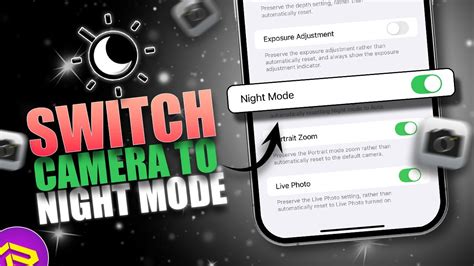
Unlock Night Mode on Your iPhone Camera: A Simple GuideHave you ever found yourself in a dimly lit setting, trying to capture that perfect moment with your iPhone, only to end up with a dark, grainy, and utterly disappointing photo?
Ugh
, we’ve all been there, right, guys? Well, guess what? Your iPhone has a secret weapon specifically designed for these exact situations:
Night Mode
. This incredible feature totally changes the game for low-light photography, letting you capture stunningly bright and detailed images even when it feels like there’s barely any light around. Seriously, once you learn
how to turn on Night Mode on your iOS camera
, your night photos will go from ‘meh’ to
mind-blowing
.In this super friendly guide, we’re going to dive deep into everything you need to know about Night Mode. We’ll cover what it is, which iPhones support it, and most importantly, we’ll give you a step-by-step breakdown on
how to activate Night Mode
and make the most out of it. We’re also going to share some
pro tips
to help you take the absolute best low-light photos, and even troubleshoot some common issues you might run into. Our goal here is to make sure you walk away feeling like a low-light photography wizard, ready to capture those magical evening moments with ease and confidence. So, grab your iPhone, get comfy, and let’s unravel the mysteries of Night Mode together! This isn’t just about taking pictures; it’s about preserving memories in their full, vibrant glory, no matter how dark it gets. Get ready to transform your iPhone photography skills!## Understanding Night Mode: Your iPhone’s Secret WeaponAlright, let’s kick things off by really understanding what this awesome feature,
iPhone Night Mode
, actually is and how it performs its magic. Think of Night Mode as your iPhone’s personal superpower for when the sun goes down or you’re in any dimly lit environment. It’s not just a simple filter or a brightness boost; it’s a sophisticated piece of
computational photography
that Apple engineered to drastically improve the quality of photos taken in low light. Before Night Mode came along, shooting in the dark with an iPhone often meant blurry, noisy, and generally unusable pictures. But thanks to this innovation, those days are pretty much over, guys!So, what exactly is happening behind the scenes when
Night Mode
kicks in? When your iPhone detects that there isn’t enough light, it automatically prepares to take a series of photos over several seconds. It doesn’t just take one long exposure; instead, it captures multiple frames at different exposures. Imagine taking a bunch of quick snapshots, some a bit brighter, some a bit darker, and then your iPhone’s super-smart software, powered by its Neural Engine, stitches all those images together. It meticulously analyzes each frame, correcting for motion, removing blur, adjusting contrast, and enhancing colors. The result? A single, beautifully exposed photograph that boasts incredible detail, significantly less noise, and colors that pop, even in conditions that would normally lead to pure darkness.It’s truly a marvel of modern mobile photography. The key benefits of using
Night Mode
are pretty obvious: you get much brighter photos, an impressive reduction in visual noise (those tiny, distracting specks you see in dark photos), and far better color accuracy. This means your photos will look more natural and vibrant, not washed out or desaturated.Another crucial aspect to understand is which iPhones support this game-changing feature. Night Mode was first introduced with the
iPhone 11 series
. So, if you have an iPhone 11, 11 Pro, or 11 Pro Max, you’re good to go with the main wide-angle camera. But Apple didn’t stop there! Subsequent models have expanded its capabilities. With the
iPhone 12 and newer
(including the mini, Pro, and Pro Max models), Night Mode isn’t just for your main camera anymore; it also works with the
Ultra Wide lens
. And for those of you rocking an
iPhone 12 Pro, 13 Pro, 14 Pro, or 15 Pro
, you can even use Night Mode with the
Telephoto lens
and, excitingly, the
front-facing camera
for those incredible low-light selfies! Knowing your device’s capabilities is the first step to truly mastering
Night Mode on your iOS camera
. It’s a testament to how far phone cameras have come, allowing us to capture scenes that were once impossible without bulky, expensive professional gear. Get ready to unleash its full potential!## How to Activate Night Mode on Your iOS CameraAlright, guys, let’s get down to the nitty-gritty:
how to turn on Night Mode on your iOS camera
and start snapping those stunning low-light shots! The best part about Night Mode is that, in most cases, your iPhone is smart enough to know when you need it and will
automatically activate
it. You don’t usually have to go digging through settings menus, which is super convenient, right?When you’re in a low-light environment, simply open your Camera app. If your iPhone detects that there isn’t enough light, you’ll see a little
moon icon
appear in the top-left corner of your screen (or top-right if you’re holding it in landscape mode). This isn’t just any moon; it’s a
yellow moon icon
that tells you Night Mode is active and ready to work its magic. Beside the moon, you’ll often see a number, like “3s” or “5s”. This number indicates the suggested exposure time, which is how long your iPhone will be capturing light to create the final image. Typically, the darker the scene, the longer the suggested exposure time will be.Now, while your iPhone is pretty good at figuring things out on its own, you might want a bit more control over the exposure. To manually adjust the exposure time, tap on that yellow moon icon. A slider will pop up above the shutter button. This slider allows you to increase or decrease the exposure duration, giving you more creative control over the final brightness of your photo. Sliding it to the right will increase the exposure time, making the photo brighter, while sliding it to the left will reduce it. You can even slide it all the way to ‘Off’ if you decide you don’t want to use Night Mode for that particular shot, even if your iPhone suggested it. This is super handy when you want a darker, more moody shot or if you’re experiencing too much motion blur.Remember, when
turning on Night Mode on your iOS camera
, the most important thing is
stability
. Because the iPhone is taking multiple exposures over several seconds, any movement during that time can lead to a blurry photo. So, when you tap the shutter button, try to hold your iPhone as
still as a rock
for the entire duration indicated by the timer. If you’re using a tripod, you’ll notice that your iPhone might automatically suggest an even longer exposure time, sometimes up to 30 seconds or more, because it knows the phone is completely stable. This is where you can truly capture incredible detail and light that would otherwise be invisible to the naked eye.A little trick for stability: if you don’t have a tripod, try leaning your iPhone against a stable surface like a wall, a table, or even use your hands as a makeshift tripod by bracing your elbows against your body. Even something as simple as pressing the volume button to trigger the shutter can help reduce camera shake compared to tapping the on-screen button. Mastering
how to activate Night Mode
isn’t just about pressing a button; it’s about understanding the subtle nuances of light and stability to get truly outstanding results. Don’t be afraid to experiment with the exposure slider – it’s there to empower your creative vision and help you nail that perfect shot every single time!## Mastering Night Mode: Pro Tips for Stunning Low-Light PhotosOkay, so you know
how to turn on Night Mode on your iOS camera
and roughly how it works. But now, let’s talk about taking your low-light photography from ‘good’ to
absolutely epic
! These
Night Mode tips
are going to help you squeeze every ounce of potential out of your iPhone and capture truly
stunning low-light photos
.First and foremost, the golden rule of Night Mode is
stability, stability, stability!
We touched on this, but it bears repeating with emphasis. Since Night Mode composites multiple images, any movement during the exposure period can introduce blur. For the absolute best results, a
tripod
is your best friend. Even a small, portable one can make a huge difference. If a tripod isn’t an option, find a stable surface to rest your iPhone on, like a wall, a table, or even the ground. If you’re hand-holding, brace your elbows against your body, hold your breath, and try to be as still as humanly possible for the duration of the shot. You might even want to try using the volume buttons to trigger the shutter, as this can sometimes cause less shake than tapping the screen. Another pro move for stability is using the self-timer, even if it’s just for 3 seconds, to completely eliminate any shake from your finger pressing the shutter button. This allows the iPhone to settle perfectly before it begins its multi-shot process.Next up, let’s talk about
composition
. Just because it’s dark doesn’t mean you should abandon all the rules of good photography. Think about leading lines, the rule of thirds, and foreground interest. In low light, bright elements in your scene, like streetlights, neon signs, or illuminated windows, can become fantastic focal points. Use them to draw the viewer’s eye. Also, consider capturing silhouettes against a brighter sky or a distant light source – Night Mode can still help bring out some detail in the darker areas while preserving the dramatic outline. Don’t just point and shoot; compose your shot thoughtfully, even in the dark.When it comes to
avoiding motion blur
, especially with moving subjects, Night Mode can be tricky. If you’re trying to photograph people or pets that are moving, even slightly, during the several-second exposure, they will likely appear blurry. In these situations, you might need to
manually reduce the Night Mode exposure time
using the slider we discussed earlier, or even turn Night Mode off entirely if the motion is too significant. Sometimes a brighter, but slightly noisier, photo without motion blur is preferable to a perfectly exposed but blurry one. It’s all about making a creative choice for the specific scene you’re capturing.Don’t forget the power of
editing Night Mode photos
. Even though Night Mode does an amazing job, a little post-processing can truly elevate your images. Use your iPhone’s built-in Photos app or a third-party app like Lightroom Mobile or Snapseed. You can fine-tune exposure, boost shadows, reduce highlights, adjust contrast, and even remove a bit more noise if needed. Sometimes, pulling down the highlights slightly or boosting the blacks can add more drama and depth to your night shots.Experimentation is key! Play around with the manual exposure slider. Try capturing the same scene with different exposure times to see how it affects the mood and detail. Also, think about
when not to use Night Mode
. If there’s actually enough ambient light, or if you’re trying to create a specific dark, moody aesthetic, Night Mode might over-brighten the scene. Knowing when to let your iPhone do its thing and when to intervene is a huge part of mastering
low-light photography with your iPhone
. By consistently applying these
Night Mode tips
, you’ll soon be capturing incredible, envy-inducing photos after dark.## Troubleshooting Common Night Mode IssuesEven with all the awesome features and knowledge on
how to turn on Night Mode on your iOS camera
, sometimes things don’t go exactly as planned. Don’t worry, guys, it happens to the best of us! Let’s tackle some common
Night Mode problems
and
iPhone camera issues
you might encounter, so you can quickly get back to capturing those magical moments.One of the most frequent questions is: ***
